Wednesday, March 19, 2014

Interview with Oliver of Sonne Hagal

Sonne Hagal is a German neofolk band that put out its first recording in 2000, a 10" record called Sinnreger. Since then, they have released many singles, EPs, and LPs. Their music is astonishing from its lyrics to its orchestration to its precision. The Sonne Hagal Website gives a picture of the band as three silhouettes in a nearly black and white backdrop. This serves the purpose of demonstrating the mystery behind the band. Who is Sonne Hagal? How did their music come to exist?

These were a few of the questions I personally had before beginning this interview. Through the past few months, Oliver and I had started a sort of pen-pal-like correspondence. His first e-mail to me in the vein of an interview was "Well, we may try a step-by-step-interview, but I have to warn you. I am the worst interview partner ever, a grumpy old man, lazy and humourless." I found this to be an unfair self-judgment, as Oliver gave me a lot of really great answers and some recommendations to further my recent neofolk obsession.

As an outsider looking in, the beginning neofolk listener observes a fixation on Runology as well as European History and Mythology. I've learned a lot since becoming interested, though I have merely scratched the surface of neofolk's depths, as one can see after reading any interview with Ian Read (of Fire & Ice). Oliver is also very learned and gave me some good leads on where to continue my search.

In the interview, Oliver also lets slip that he has selected twelve songs for a new album. Unsurprisingly, I'm ecstatic as I'm typing this.

You can check out Sonne Hagal on Facebook and listen to their music on Spotify, or wherever you go to listen to music.

Jordan: When did you start making music?

Oliver: If I remember correctly I got an own guitar by the age of 12. But I found all those strings too annoying to deal with and put the instrument away pretty soon. Later, maybe by the age of 14 or 15 a schoolmate forced me to join his drum lessons during the vacations. He had occupied his father’s garage and built up a full drum set which looked like a mingle-mangle of scrap-metal and fossil drums… Well, those were probably my worst long vacations but along the way I learned to play the full drum set and ended up as a drummer for several punk rock projects in the local leftist and squatter’s scene. Later I rediscovered the guitar and together with our today’s keyboarder and bassist we started what later became Sonne Hagal.
J: When and how did you start Sonne Hagal?

O: It must have been the early nineties or mid-nineties when we changed our musical style totally. So far we had created and performed wildly improvised ritual and hypnotic noise collages and soundscapes. We had one synthesizer, a couple of drums (on which I played with human bones) and a drum computer. When we “rehearsed” we just checked our general concepts and ideas, no real song structures. We just followed each other referring to rhythms and melodies. The things we did couldn’t be repeated one-to-one when we performed in front of an audience. We just went deeper and deeper into the sounds and rhythms. Some of these performances must have been amazingly awful. Others went pretty well, depending on how well we interacted. When we were joined by our bassist and violinist we changed that noise terror into real song structures, repeatable melodies and lyrics. I found it pretty interesting to convey emotions and thoughts with rather “catchy” melodies instead of pure noise. At that time a good friend introduced us to neofolk, which we had never heard of before and we got to know music by Death In June, Sol Invictus, Fire + Ice. Their music strengthened our idea to walk this musical way.

J: How do you guys write lyrics? What do you focus on?

O: There are different ways that lyrics come off. Runic knowledge and Northern Mysteries have always been interesting for us though they are not the only topics we sing about. Sometimes I just come across good poems where more or less well-known poets have written wonderful thoughts and profound things that affect time, love and life in general. If these poems really touch me I try to find a melody that emphasizes, widens or sometimes even hides or thwarts the words. On the other hand I set to music things that have haunted me in dreams (as long as I can remember them) or things that move my heart or mind. Sometimes one single word I hear or read is enough to be inspired for a whole song. Sometimes I collect and rearrange ideas for a longer time until I am satisfied with the lyrics. Basically it’s not a rational process to validate whether the lyrics are good or bad, it’s rather a very subjective impression, the feeling that the verse is “whole” and expresses what I want to say. The feeling, the lyrics “suit me.” It is probably me alone who understands my own lyrics entirely (if at all), because it is in the nature of things that anyone will read, interpret and understand what he wants to understand. And that’s great - I love that certain “wiggle room.” There should be space enough for everyone to find something within the tracks.
 
J: Runes and Northern mysteries are something that interests me. What would you say to someone curious about them?

O: Well, the Runes and Northern Mysteries are wonderful things. To study and go into them means to search and find your history, your past, or even yourself. I personally see the Runes as a powerful medium to connect independent individuals and free spirits to create a network of people that are fully aware or awake. Children may find exciting stories about ancient gods; adults may see bigger relations between man and nature, between past, present and future. The Northern Mysteries and the Runes contain ancient knowledge and the memories of thousands of people that lived ages ago. Within the Runes we find everything that represents life itself like order and chaos, life and death, energy, emotion and will. However, they still enclose countless secrets and proof our will to go deeper and deeper into these mysteries and reveal one or another secret.

J: Do you think there are any artists who do a particularly good job of representing runes and northern mysteries?

O: There have been a couple of artists and musicians that have impressed and thrilled me. Of course I liked all the more or less obvious references to the Runes by Death In June, Sol Invictus or Fire + Ice. Particularly RĂ»na by Fire + Ice is a masterpiece. But I also liked less well-known artists and their runic influenced tracks such as Rob Crocker and Kate Waterfield. And last but not least, I love listening to Freya Aswynn’s The fruits of Yggdrasil.

J: How do you record music?

O: When we recorded our first 10“ record we hadn’t any professional equipment at all, I didn’t even own a guitar with pickup and had to borrow one for the recording sessions. We recorded on 8-track-analogue-tape. To get simple “special effects” like a distorted voice we used old speakers like those that are used in a doctor’s practice. Then we gave maximum input into those speakers, overrode them and got a distorted effect. The big disadvantage was that those speakers simply broke after two or three uses and we burnt up a lot of those speakers to get a proper result. There was also no way to correct a failed recording as we can do today with digital equipment. We simply had to start anew what was recorded poorly. Usually we start with the guitar tracks as all the music was written on guitar and add all other instruments step by step. We also like long-distance-recordings where we send single tracks to our friends and let them add their ideas and send the recordings back. Today we record digitally in a little recording studio that we built in our bassist’s apartment. Those digital tools offer several possibilities to experiment with sounds and effects to fulfill the ideas we had in mind.

J: Have you been working on new material?

O: Oh yes! Actually we are always working on new material. Once a sound carrier is released we start working on new tracks. But everything happens in slow motion. We all live in different cities and it demands skill to organize rehearsals, appointments for recording and mixing sessions or live shows. Nonetheless we have selected twelve songs for the next album. We’ve recorded the stuff already and recently work on a little “fine-tuning.” The sound of this album is even more organic, hermetic than before. Withdrawn, but with a lot of energy. We think it will be our best music ever!

Thursday, March 6, 2014

Interview with Chris of Ex-Cult

Ex-Cult is a modern Memphis punk band, following in the impressive lineage of bands such as the Reatards, The Oblivians, and more. They have put out one LP and one 7" already on Goner Records. To make matters more remarkable, the band boasts production credits from the likes of the one and only Ty Segall. Live, they are a force to be reckoned with. On recording, they are equally immersed in their music. This band is going places and there's a reason for that - they tour with abandon, having played all over the United States and more with Ty Segall, the OBN III's, Mac Demarco, Acide Baby Jesus, and more.

I got hip to the band mostly cause I'll listen to anything on Goner Records. This record was no exception in Goner's legacy of putting out hits. I missed their two shows in Chicago. I'm still kicking myself over that one. The good news is that they're playing the Empty Bottle in May, my favorite Chicago venue, and the month of my birth. It's a sign.

You can check out the band on their FACEBOOK PAGE and listen to their singles on the Goner-Soundcloud. Here's the FIRST SINGLE. And honestly, don't be a dope -PREORDER THE RECORD.

Jordan: Who all is in Ex-Cult? When did you guys start the band?
 
Chris:
Ex-Cult is
Chris (me) -Vocals
Natalie- Bass
Alec- Guitar
JB-Guitar
Michael- Drums
I think our first show was in 2011. I can't remember.

J: You guys had previously been called Sex Cult. Why the change in name?

C: These idiots started a label called Sex Cult Records, and they tried to sue us. In retrospect we should have let them sue us, none of us have any money. After much deliberation, we decided to just drop the 'S' and become Ex-Cult.

J: What is it like being a garage rock band in Memphis with a dynamite label like Goner and legends like Jay Reatard and the Oblivians?

C: It's really cool to have a label/store like Goner Records 10 minutes from your house. But I don't think Memphis bands from the past get as much local attention as they deserve. Bands like Lost Sounds, The Oblivians and Jay Reatard had a major impact on music at the times they existed, whether people want to believe it or not. I remember being 19 on tour and seeing Lost Sounds posters in people's rooms and being like what the fuck? I had no idea bands from Memphis registered on a national level at that point. The local scene is small, but it rules. You can go out to a bar and hangout with someone that used to be in The Reatards or Deathreat and not even know it.
  
J: What are some of your favorite bands from Memphis currently?

C: True Sons of Thunder have been my favorite Memphis band for some time now. JB and his wife Laurel play in a band called Moving Finger that I really like, Natalie plays in a band called Nots that is also really cool. She also plays in Moving Finger. Gimp Teeth are a new band that fuckin rips, check them out if you can. 

C: Past Memphis bands I like: Final Solutions, Reatards, Oblivians, Knaughty Knights, Porn and Grenades, Mutant Space Bats of Doom, Rednecks in Pain, Dead Trends, Pulltrigger, Staags, Sector Zero, Angry Angles, Lost Sounds, AAAA New Memphis Legs...I could go on.

 
J: How did you guys start writing and recording music? Did you have some song ideas floating around before?

C: We had an idea of what we wanted to sound like before we started, but no one brought songs to the first practice. The first time we practiced, Me JB and Michael got together and JB had the impression we were going to try do a hardcore band similar to my old band Vile Nation. After we told him we wanted to do something more psychedelic we started jamming, and everything else just fell into place.

J: Who writes your songs? Do you guys have certain roles?

C: We all write the songs, collectively. I have always written all the lyrics and named almost all the songs, but that's not a rule or anything. Alec helps write the lyrics sometimes, he wrote some of the lines in our song “Don't Feel Anything” and he came up with the concept behind “Catholic Entries.” Everyone plays multiple instruments (except me) so no one is stuck to whatever they play live when we are practicing. There are 5 of us, so everyone leaves their mark on a song. That's how we've always approached writing music.

J: What was the process of making your first LP like? How did those songs get made?

C: Some of those songs were really old, Young Trash is the first song we ever wrote.

J: You guys worked with Ty Segall on that record. What was that like?
 
C: It was cool. Ty asked us if anyone was producing the first record, and at that point no one had offered to do anything. He was real stoked on us from the start, and I think that probably made some people pay attention to us that wouldn't have otherwise. We are going to continue to record with him, I think we're playing some shows together this year too.
 
J: What can you say about your upcoming record on Goner? Was it different making this album?

C: Midnight Passenger is the only type of album that we could have made at this stage in our band. It's a reflection of the amount of time we spent locked-in last year, performing together. Last album we were in recording in San Francisco, sleeping in the studio and on Ty's floor, with the clock against us because we had to fly back to Memphis whether we were done recording or not. We recorded Midnight Passenger 15 minutes from the neighborhood where we all live in Memphis. We got to go home every night, go to work in the morning or whatever, then focus on whatever we were doing that night in the studio. That being said if we get the chance to record in San Francisco again I won’t think twice about saying yes.

J: Do you guys have any plans to tour after releasing the album?

C: Yeah we are going to tour both coasts again. Hopefully hit places we haven't been to before.
 
J: Are there any places you guys like to go to in particular while you tour? Any notable restaurants or haunts?

C: The whole time we were recording in San Francisco we would hang out at this place called Vesuvio during our off time. Allen Ginsberg used to get drunk there or something. Other favorite bars include Mr. Bings in San Francisco, The Roost in LA, Cha Cha Lounge in LA, The Shanty in Eureka, CA, Foobar in Nashville, The Lamplighter in Memphis, Santa's Pub in Nashville, Daddy's in Brooklyn, Otto's Shrunken Head in Manhattan. 

J: Anything else you'd like to say?


C: Shout-out to Rawkdonald. What's up to the girl wearing a nightie that kicked us out of her apartment at 4am. New York's alright if you like saxophones. What up to Cameron Higgs in the swamp. The Crocodile King.  Listen to Useless Eaters. Memphis Punk Forever.

Wednesday, March 5, 2014

Interview with Doug, Max, and Natalie from Good Willsmith

The Cover of their Upcoming LP
Good Willsmith is a deep zone. It’s the collaboration of three young music enthusiasts (Max Allison, Doug Kaplan, and Natalie Chami) who went to Northwestern and decided to play music together, albeit after they had graduated. They make experimental music that hovers in the realm of ambient, drone, and noise. It’s also breathtakingly beautiful. GWS successfully weaves guitars, synthesizers, voice, and more through loops and effects. No set is the same as the next, though similar overall structures or ideas may be present. GWS has put out several releases, some of which are on Doug and Max's label Hausu Mountain. In addition, they have a full-length LP coming up in about a month, which is distributed through THRILL JOCKEY

Hausu Mountain prominently features an homage to Obayashi's classic flick in its logo. The label puts out a lot of releases and I have yet to run across one that is lacking. I recently did an interview with their label's D/A/D who put out an excellent cassette called The Construct, which got press from the likes of NPR. These dudes have not slowed down though, as they recently put out Lockbox and Sugarm cassettes.

Natalie helps run a music-putter-outer of her own called Screaming Claws, which gives resources for experimental and improvisational musicians to put out music. Each week, a new session appears, which ends up being a fully realized piece of music.

This is a pretty in-depth interview because there's a lot going on with these three. It's been really rewarding working with these folks and seeing them at shows. I got to meet Doug and Max at a Ryley Walker/Circuit Des Yeux/Mark Trecka show and I met Natalie at one of her TALSounds shows. From a personal standpoint, these three are great folks too, which goes an awful long way with me, and I can't wait to see what they do next.

You can check out the GWS FACEBOOK PAGE in addition to their BANDCAMP PAGE as well as the TALSOUNDS FACEBOOK PAGE and SCREAMING CLAWS FACEBOOK PAGE, the HAUSU MOUNTAIN FACEBOOK PAGE and their WEBSITE.

I've never posted so many links at once.

Jordan: Who is Good Willsmith? When did you guys start making music? Have there been any lineup changes?

GWS: Max and Doug met Natalie through a mutual friend in 2012. Though all three of us went to Northwestern, Max and Doug didn't know Natalie while we were at school. We started recording music together in February 2012. Our first session featured our dear bud Aeron Small (who also plays with us in The Big Ship, and solo as Ron Tubman) on guitar. We find that we generally have enough happening at any moment as a three-piece - but we're definitely plotting some collab ideas for the future.

J: First off. How did you think of that name? It's brilliant!

GWS: It just came to us randomly one night and we ran with it. We try to stay lighthearted and not take ourselves seriously. The name serves as a kind of ego deflater and bullshit detector, and it sticks in people's heads pretty well. It means nothing.

J: Do any artists in particular influence or inspire Good Willsmith?

GWS: Doug and Max are inspired by the many styles and eras of music they obsess over as listeners: the contemporary "noise" underground, 20th century electronic music, the holy triumvirate of Earth / Sunn O))) / Boris, minimalism, black metal, Brian Eno, Khyal, Dhrupad, Carnatic music, kraut and kosmiche, infinite etc. These traditions provide inspiration on the level of tone, structure, atmosphere, live performance strategies, but we try to channel these ideas into something more personal and idiosyncratic when we play together. We focus on dynamics, the development of the session, listening to each other, and responding empathetically, instead of dwelling on the supposed origin or heritage of our sounds. As a live performer and "lead vocalist," Natalie identifies deeply with Alice Coltrane, Björk, Terry Riley, Sade, Aaliyah, and the work of Portishead, Broadcast, and Blonde Redhead.

J: How often do you get to perform? What is the role of a live show for you guys? Do you plan out your set or do you improvise?

GWS: We play together as much as we can. Before a tour, we'll start planning a set by discussing ideas we've had, drawing out simple graphical scores that illustrate relative dynamics and instrumentation across the session, sometimes making lists of elements or tones we want to incorporate into a certain passage of the set. We never really write out set material in terms of melodies, progressions, harmonic decisions, looping decisions - all of this emerges in the moment during improvisation. But the conditions of each part of the session are loosely planned. When we have a structure kind of locked into place, we can workshop it over the next series of live performances - this is especially effective before a tour or a specific local gig we're preparing for. Then, when we've presented it live as much as we want to, we record the session as the "studio version" - which is still fully live and improvised, but happens to have all of our amps mic-ed. Doug mixes the resulting session, and that stands as a proper album release.

J: What else is in your future for Good Willsmith?

GWS: We're releasing a tape in the near future on Baked Tapes, the label run by our bud / legendary zonelord Jesse DeRosa (of Grasshopper and Hex Breaker Quintet) - it's called Aquarium Guru Shares the Secret Tactic, and it documents a set that we workshopped over a lot of local gigs and a residency at a gallery called HCL in Chicago (late 2012 - early 2013). On March 25, we're excited to be releasing our first LP with the amazing Mexican label Umor Rex - who produce truly beautiful physical items, and have always showcased music we love. The album is called The Honeymoon Workbook - and it represents material we workshopped over our 2013 summer tour, on the west coast with Black Hat and on the east coast with Date Palms.

J (To Doug & Max): What's Hausu Mountain? What kinds of acts or recordings do you like to release through the label?

Doug & Max: We've been running Hausu Mountain for the last two years. From the beginning, our plan was to release our own music and the music of contemporaries we love. We have no limitations on genre or style, but we release music that we find to be engaging and forward-thinking, by our standards. Other than our personal projects (Good Willsmith, The Big Ship), we work with friends like Moth Cock, Black Hat, D/A/D, Lockbox, and Sugarm. An early project for us was to get together a batch of solo improv sessions for our Mugen Series of split tapes: the first batch had the three of us in Good Willsmith, the dudes from Grasshopper, Natalie's bandmate Brian Griffith (Greyghost), and the aforementioned Ron Tubman and Sugarm.


J (To Doug & Max): What have been some of the most successful releases that you guys have had?

D & M: Recently, the D/A/D release "The Construct" - made by our best bud and bandmate Zach Robinson - has surpassed all expectations. We sold out of our first cassette edition in less than a month - and saw some great exposure for Zach's music.

J (To Doug & Max): How was the Hausu Mountain showcase at the Empty Bottle?

D & M: A great success. It was incredible to put together such a healthy bill of zoners from near and far. We loved having Moth Cock and Sugarm in town from the great East. Mind Over Mirrors, Bitchin Bajas, Quicksails, and Sam Prekop represented experimental Chicago at its deepest, and we were so pumped to get everyone together.

J (To Doug & Max): What's coming up for Hausu Mountain?

D & M: We're expanding in 2014 to release a lot of music we consider to be groundbreaking and exciting - like an LP by Grasshopper, a Form A Log / Moth Cock LP split, and a full-length from Eartheater (Alex Drewchin from Guardian Alien). We're issuing another batch of Mugen tapes - with performers like Plankton Wat, Head Boggle, Quicksails, the members of Moth Cock and Telecult Powers, Rob Frye (of Bitchin Bajas and CAVE), and Quidditas (Philly-based drum / noise wizard Raleigh Booze). We're stoked about our upcoming tape release with Mondo Lava - a project from Arcata, CA that we're truly obsessed with - and dub/rhymthic modular synth guru William Selman. Also, always more Moth Cock.

J (To Natalie) : What's your project TalSounds? How did that start?

Natalie: TALsounds came to be my solo project after Brian Griffith, my collaborator in ambient duo l'éternèbre, moved to LA in Sept 2011. We had a residency going on, and I really loved what we were doing. I immediately panicked when I realized he was really not going to be in Chicago anymore and started asking other improvisational musicians to play with me. Although it was super fun working with some of my favorite musicians, nothing was very consistent. Instead of changing group names on bills every time I played, I decided on a solo moniker, and perform under that name in collaboration with other artists too to keep things more consistent.

J (To Natalie): What kind of equipment do you use for your music?

N: My primary sound sources are my voice and analog synthesizers (Roland Juno-60 and Korg Lambda). I process my live input through some effects pedals, and loop sounds with an EHX 2880 4-track loop pedal. I also use a few small noisemakers and contact-mic based instruments, along with a dedicated oscillator called the Grendel Drone Commander (made by Eric Archer).

J (To Natalie):You studied Music at Northwestern. Has that impacted or influenced any of your music?

Studying classical music at Northwestern has definitely impacted the music I write/play. I studied Classical Voice/Opera and Choral Music Education. The program, like most music conservatories, requires theory, aural skills, etc. I also have studied classical piano since I was 3. I’ve always been so immersed in classical training that I couldn’t help but think about notation and theory every time I listened to any kind of music. There was no off switch. I still don’t think I have an off switch, but it’s the reason I love performing improvised/experimental/ambient music so much. The theory tools are all in my hardwiring now, but it allows me to just let go and react to sound again (within these genres). It’s the closest I can get to the off switch, and just enjoy it freely again. Don’t get me wrong, I still practice, study and teach classical music every day, but it’s in the l’eternebre, TALsounds, and GWS sets when I get into that meditative state of music.

J (To Natalie): You also help with Screaming Claws, kind of an artistic network. Tell me a little bit about that. What is Screaming Claws? How did you get involved? What do you do for Screaming Claws?

N: I started Screaming Claws with Brian Griffith. We wanted to create a network or collective for like-minded artists with similar aesthetics. Our main goals are to connect people (for shows, collaborations, networking) and also to motivate each other to really continue creating beautiful tunes! Since Brian’s move, we’ve spread our outreach from Chicago, to LA, and now to Vienna, with our later founder, Steffi Neuhuber. We do weekly digital releases by one of us or one of our friends, and put together “Delayed Improvs” where we send over an improvised track and pass it around until we have about 3-4 people involved. We also get people to play together in real life, too (Living Room Sessions held on the same day in LA/Chi/Vienna or just by telling each other about friends in respective towns that they should meet, etc).

J (To Natalie): What's coming up in the future of Natalie Chami?

N: Besides all of the GWS happenings, I have solo shows in Chicago at least monthly, and a split coming out this spring on Cosmic Winnetou (atay ilgun, alper yildirim & TALsounds, steffi neuhuber - split (cw19)). I’m also planning another tour/recording session in Europe this summer. I also plan to release another solo album in the fall on Hausu Mountain. Other than that, recording and mixing/sifting through a lot of older recordings and collaborations from this past year and figuring out what to do with them.  And just getting better at my thaang (learn the ms 20, maybe getting better at incorporate beats, figuring out a way to record my live looping in a way i can mix in post-production for better quality recordings). Finding more artists to release on Screaming Claws.

J: What all have you been listening to lately?

Max: Container, Lil Ugly Mane, The Residents (always), John Zorn (always), new albums by White Suns, Bohren & Der Club of Gore, Sunn/Ulver, The Body, Horseback, Actress, Jerry Paper, tapes on Orange Milk and Tranquility Tapes, everything on PAN, DJ Screw, Young Thug, Beyoncé, video game soundtracks (Mother series, Final Fantasy), much more.

Doug: I've been slowly digging through this magical box of Phish cassettes from 89-98. Guardian Alien - Spiritual Emergency and Greg Fox - Mitral Transmissions have been getting constant play. I got some weirder Residents tapes - Assorted Secrets and Cube-E - that have gotten me to dig deeper in the catalog. Safety is the Cootie Wootie.

Natalie: Lil Ugly Mane… Augustus Pablo. Nothing new really… Hella and Deftones haha, American Football, Snoop Dogg’s Doggystyle.  I dont know, I recently updated my iPod with all of my old jams. It’s kinda embarrassing. Just heard Co La’s album Moody Coup. So good. Need to get into that some more. Also that new Jerry Paper ish. My friends' new releases. Everything Hausu is putting out cause it rules.

J: Are there any shows in particular that you are excited for?


GWS: Good Willsmith is performing on March 28th as part of Andre Foisy’s METAL YOGA series. More details TBA. We’re also performing on a bill with Crowhurst and The Auditor on April 22nd at Club Rectum. TALsounds plays solo on a bill with The-Drum at Schubas on March 11th.

Tuesday, February 18, 2014

Interview with Bo from Hand of Dust

It doesn’t take a brainiac to know that something is happening in Copenhagen. It seems that there are a lot of really good bands coming from one place, and one scene in particular. Iceage is the first band that comes to mind when elucidating this circle of musicians. They were the first band to really get the attention of United States listeners, but they weren’t complacent with just bringing over one band. A lot of this has to do with bands that share musicians, but it also has to do with a limited amount of practice spaces and music venues, as Bo from Hand of Dust explains below. (Nice Segue, Jordan)

I picked up Hand of Dust’s new 7” record Without Grace or Glory because it was released on Blind Prophet Records, which is pretty much a stamp that I’ll like it. Rats off to you, Sean. You’ve done it again.

The dirge-riddled bass line is an immediate indicator of what will come. “For I have read the short stories/Cut shorter by memories/I’ve seen it in the yellow leaves/Of dying family trees.” Death is a theme of this record, whether through the visible ghost of “Without Grace or Glory” or through the changing color of family tree leaves. It’s a serious record that muses on temporality, history, and personal future and there’s a reason that a lyric sheet comes with the record. Lyrics are clearly important to the band and it makes for a more rewarding listen.

They will be playing a show in L.A. with other Danish punk bands on May 16 & 17, which is going to be incredible. I'm debating flying out for it myself. You can check out more about that HERE

You can check out their FACEBOOK PAGE or listen to their music on their BANDCAMP PAGE

Jordan: First off, tell me a little bit about the Copenhagen music scene that you're coming out of. It seems like there is a lot going on right now around the area?

Bo: We rehearse at a place called Mayhem. This is also a venue for shows etc. I think the main thing about our bands is that none of us got together around a table and decided what "genre" of music we wanted to play or what band we wanted to sound like. This seems to be the case with a lot of the stale and empty music many rock bands play these days 

J: Who all is in Hand of Dust? How did you guys meet?

B: I’m the singer and guitarist in the band, Jesper plays bass and Victor drums. When we started playing together the idea was just to perform the songs i'd been writing and playing on my own, in a band setting. After playing together two or three times, it was obvious that this was a band and not just me backed by two friends. I still write the songs, but these days i never feel that anything is done before we've played it together. I always feel that the better i know somebody, the harder it gets to remember how i met them.

J: Your original demo tape came out a while ago. Tell me a little bit about how you made and recorded those songs.

B: Most of the songs on the tape are old and were written before we started the band. the tape was recorded through a mountain of mixes and cables on the floor of Mayhem, by our good friend Simon Van Deurs.  He did quite an amazing job considering the gear used and the amount of on the spot solutions he had to come up with.

J: Did you guys get to play live a lot after this came out?

B: “play live a lot" in Copenhagen isn't that much, as there aren't that many venues. The tape didn't have any kind of impact on us getting shows as most of the shows here are put up by friends or the bands themselves. I will say though that playing live shows is a very important thing for us and that songs always seems to come to me in the days after a show.

J: Have you guys played the US before?

B: No. I've never even been to the states, but Jesper and Victor have. On the 16.th and 17.th of May, Hand of dust, Lower, Communions, Iceage, Age Coin, Puce Mary, Girlseeker, Lust for Youth, Marching Church, Sexdrome, Croatian Armor, Sejr and Deeplands are all coming to the US to play the Church of York in L.A. I'm really looking forward to it, it's gonna be complete chaos.

J: You guys have a new 7" out. What was the process of recording that like? Who wrote the songs?

B: It was recorded in four hours, by Nis Bysted from ESCHO. The first day got canceled so recording was a bit stressed, but in all honesty i don't know what we would have done with a second day. Unless you’re Scott walker, I never understood how anyone could spend months or years recording. The songs were written by me and we tried to get in the studio as quickly as we could after figuring out how we wanted to play them. 

J: How did you decide to get in touch and work with Blind Prophet records?

B: We played a show in copenhagen with Cult of youth september last year. We just talked to Sean that night and after seeing him play live, we felt like this was a person who understood our way of playing music. When Sean is singing a song, he doesn't 
seem to have a choice on whether or not to give in to it. He doesn't think more then two or three seconds ahead. Thats exactly the way i feel. 

J: What is in the future for Hand of Dust?

B: We’ve just recorded two songs, to be released as a single. These songs are great examples of what's been happening in the band and we want to get them out as quickly as possible. How is still a bit uncertain. 

J: Anything else you'd like to say?


B: The brighter the eye, the darker the pupil.

Thursday, February 13, 2014

Interview with Gary Wilson

Let me bend yours for a second. The rate at which knowledge is discovered is greater than the rate at which a single human being can intake new information. Thus, regardless of the amount of learning, listening, or thinking one does, one is getting progressively more ignorant by percentage as time goes on. I find it liberating. But it also means that we miss things. Luckily, other people find things you missed.

It seems to happen all the time. Music gets rediscovered, or maybe simply discovered. With movies like Searching for Sugarman and A Band Called Death supporting artistic resurgences, it seems like the next big thing is always lingering in the discounted used-record bin. It goes to show that a lot of influential (or simply good) music gets glossed over. My recommendation is to keep the ol' ear to the ground and refrain from sudden movements.

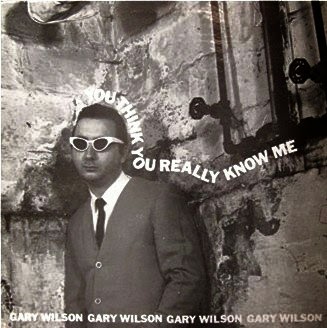
Gary Wilson is one of those who was passed over. When Gary's first album You Think You Really Know Me came out in 1977, not many people paid attention. Gary released a handful of EPs and singles in the 80s, but was relegated to playing as a backing musician in other bands and working odd jobs. In 2002, however, this album was re-released, promoting a new found fascination with Gary's music.

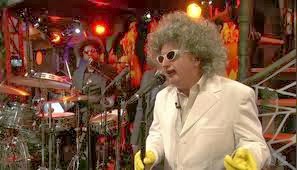
Since, Gary has released several full-length albums, played on the Late Night Show with Jimmy Fallon supported by the roots, and been a source of inspiration to many people. His music is a combination of all things pop, but also all things weird, as Gary illuminates in his love for both the Beatles and the Avant-garde below. Gary stands tall as one of the pioneering examples of home-recordings as well along with R. Stevie Moore and others, a movement that seems to become more inspiring and common today as music and other artistic mediums are readily accessible today.

You can check out his WEBSITE or see some of his music on the STONES THROW WEBSITE.

Jordan: When did you first begin making music?  

Gary Wilson: I wrote my first song when I was 10 years old.  My family had a large organ and several instruments around the house.  I was also trained throughout my school years on cello and string bass.  My father was a bass player with the local quartet.  At 11 years old, I taught myself how to play guitar.  This was when the Beatles came out.  I played in my first rock band when I was 12 years old.  I was playing Farfisa organ at the time.  

J: Did any artists or movements in particular inspire you?  

GW: When I was 10 years old, I was into Dion and The Belmonts, Fabian, Bobby Rydell, etc.  When the Beatles came out I was into the whole British invasion mode.  Then when I was 13 years old I got into avant-garde music.  My hero was composer John Cage.     

J: How did you decide to make your first 7" Dream(s)/Soul Travel? What was the response to it?

GW: I was 18 years old at the time.  I put an ad in the local newspaper asking for a backer for a record.  A doctor from Binghamton, NY answered the ad and put up the money for the single.  I did get a publishing deal with a NY music publisher.  It was during a time when a lot of jazz artists were putting out instrumental disco singles and albums.  The single recently appeared on an Adult Swim TV commercial. 

J: What was the process of writing and recording You Think You Really Know Me, your first full-length record?   

GW: In 1975 I sent demos of my album YTYRKM to a music publisher in Woodstock, NY.  He passed the demos onto singer-songwriter Robbie Dupree.  Robbie invited me to Bearsville Studios near Woodstock to record YTYRKM.  Robbie's career took off so he didn't have the time to finish the project.  I went back to my home studio and for about 6 months worked on the album.  I finished it in late 1976 and pressed it in 1977. 

J: What did people initially say about that record?

GW: My friends liked the record but some others thought it was too weird.  I had a manager at the time in NYC (Seth Greenky).  He shopped the album around to the major labels in NY.  It was always the same story.  They liked the album but could not figure how to market it.  It's funny.  I have recently heard from some of those same A&R people and they tell me how much they liked my album and still cling to the original YTYRKM album. Not sure why they thought they couldn't market it.  A few radio stations also played the album, but only a few. 

J: Has perception of it changed since you put it out? 

GW: When the album was re-released in 2002 everything pretty much changed.  Now everyone wanted a copy of my album.  I am very happy that things have turned around.

J: You kind of retired after putting that record out before more recently coming back to performing live and recording. Why did you do that? 

GW: I didn't really retire, but just accepted my fate.  It was that people weren't paying attention or were not interested. I put out a couple of singles and EPs in the early 1980s and did some live shows.  My girlfriend Bernadette Allen was a grad student at UCSD so we did a lot of experimental art, music and video. Ended up in the early 1980s playing bass with Roy Brown, Percy Mayfield, Big Jay McNeely and others and even played bass with Coasters.

J: Did you ever want to put out more music? 

GW: Yes.  I tried to get labels interested but never got a bite.  Bought a 4 channel Tascam cassette machine and recorded things.  My album "Mary Had Brown Hair" was recorded on my Tascam 4 channel cassette.

J: What has the response been to your new musical endeavors?  

GW: It seems good so far.  I have a new album coming out called Alone with Gary Wilson.  A single from the album has just been released in San Diego on a label called Rita Records.

J: You have also been performing live. What are your live shows like? Is there anything that you like to do in particular? 

GW: Every show has its own dynamics.  A lot of times I don't know what I look like before the show because I like to “transform” in private. I may end up in the backseat of a car changing or “transforming” for the show.   I guess I try to turn myself into a living canvas. 

J: How was it playing in shows with R. Stevie Moore? 

GW: I had a good time playing with R. Stevie Moore.  The two shows were sold out.  I asked Stevie if he remembers us trading albums in 1977. We will be doing more shows together in the future. 

J: Does it make you happy to be making and playing music again? 

GW: Yes. Who would have expected things to turn around for me after so many years? I’m very happy and humbled by the whole experience.

J: What have been some of the highlights of your career in your opinion? Are there any moments that stand out in particular? 

GW: The Joe's Pub gig in 2002. The showing of the Gary Wilson documentary at Lincoln Center in NY.  Playing CBGBs in 1977-1979. Going to Europe and playing 8 countries in 10 days.  Having The Roots back me up when I appeared on Late Night with Jimmy Fallon. There have been so many exciting moments that have happened to me since 2002. I have met many creative people along the way. 

J: What is in the future for Gary Wilson? 

GW: More live shows, more records and more music.

J: Anything else you'd like to say? 


GW: Do unto others as you have done to you.

Monday, February 10, 2014

Interview with Noah Coleman of Oyarsa, Monument, and Sol Y Nieve Records

Oyarsa's s/t cassette was one of the first modern tapes that I picked up. I ordered it online after seeing one of the dudes at Permanent Records wearing an Oyarsa shirt and being curious about what it was. In my book, a tape is a tape - it generally doesn't hurt to buy one since it's cheap and you get a good recording. You don't have much to lose when you buy a tape. I had listened to the recording on my computer, but it sounded much better on cassette.

They played their "last show" in Chicago at the Empty Bottle on May 9, 2013. It was a free show and I went as I had been in communication with Noah and didn't want to miss out. I got to see Winters In Osaka and Sun Splitter put on great sets before Oyarsa stepped on stage. Nothing could have properly prepared me for Oyarsa, however. Noah has one of the best black metal voices I've heard. To get a better perspective on their sound, their music is available for free download on their BANDCAMP.

After the show, I picked up the cassette of Footpath's self-titled album, which was a folk-drone act that I hadn't heard. I still listen to it probably once a week as I read. I hadn't known that Noah ran a record label, but have since been consistently impressed with Sol y Nieve's output after listening to most of the releases on the label.

You can check out Sol y Nieve on FACEBOOK as well as OYARSA. Noah recently moved to Idaho, so we didn't get to hang out all that much, but we've stayed in contact and with a busy release schedule coming up, I figured it was a good time to get the word out on an excellent label!

Jordan: Tell me a little bit about your musical projects. I'm familiar with Oyarsa, your black metal band, but what else are you involved in?

Noah: Aside from Oyarsa and Monument, I've released music as Ten Thousand Miles of Arteries and He of No Name.  I have some other projects in the works, but i'd rather not reveal any names until something final comes about.

J: How did you decide to create each of your projects?

N: They happen pretty naturally.  Just about everything I do starts off as an experiment and if I like the way it develops, I go with it.  The only exception to that is Oyarsa, which is the only proper band i've been a part of.  That started out of a mutual love of heavy music and all things space related between Josh and I.  Josh is really the catalyst for making that band happen.

J: How often do you end up writing songs? How many songs would you say that you write in a year?

N: Ha ha ha.  I have no idea how to answer that question.  A lot.  It's a pretty constant thing for me.  Obviously, most of the stuff I write doesn't get used, at least not right away, but I'll go through 2 or 3 notebooks in a year that are filled with drawings, writings, lyrics, riffs, music, etc.

J: How do you write your lyrics? 

N: They mostly start as stream of consciousness writings, and then (depending on the project that they get used for) I'll edit them down, rearrange them, add to them, etc. to make them fit whatever music I wind up putting them to.

J: How important are lyrics to you in music?

N: Equally, if not more, important.  The lyrics are why I write the music.

J: I got to see Oyarsa's "last show" in Chicago. It was awesome. Do you plan on playing live more?

N: Thank you, it was a very intense and enjoyable show for us.  We do plan on playing live, but with me moving to northern Idaho and Josh recently moving to LA, performances will be few and far between.  We have a fair amount of new material so we want to record first, then hopefully plan a couple of shows around that.

J: What have you been concentrating on musically?

N: Mostly I've been working on finishing up the new Monument album.  I've also started on some new T.T.M.O.A. material, and I've been demoing material for some new projects.  

J: You seem to have a pretty wide variety of influences, and interests. What are some of your favorite artists?

N: That's a loaded question.  Current 93, Lurker of Chalice, Leviathan, Wovenhand, Swans, Portal, Mitochondrion, Prurient, Graves at Sea, Iron Maiden, The Body, Arvo Part, Yellow Eyes, Willy Nelson, Waylon Jennings, Johnny Cash.  I could put on anything by any of those artists at any point and not be disappointed.

J: You recently moved to Idaho. How come you chose to do that? How has that been? Seems like a pretty big transition from Chicago.

N: Without going too much into my private life, my wife and I decided a few years back that we didn't want to live the rest of our lives in a city where we felt we had no freedom to do the things we wanted to.  Northern Idaho is really beautiful and fairly inexpensive so we chose here.  It has the benefit of being pretty close to Seattle as well, so we can get our 'cultural fix' (i.e. - go to shows and eat interesting food) whenever we feel like taking a small road trip.  The transition wasn't nearly as big as we though it would be.

J: What have been some of the biggest surprises about Idaho? I've never been, so from a selfish standpoint, I just want to soak in all the knowledge I can from you haha.

N: I still haven't gotten used to seeing mountains everywhere I go, smelling fresh air and woodstove/fireplace smoke first thing in the morning, and how quiet it is at night.  

J: When/how did you start your label Sol y Nieve?

N: I started it in 2010, mostly as a way for me to release my own recordings.  When those first two tapes sold well enough, I realized that I could turn it into a real label. I started contacting bands who I really enjoyed (Teeth Engraved... and Yellow Eyes were among the first) but weren't getting the kind of exposure and physical production that I thought they deserved. It all kind of took off from there.

J: What all have you released on the label?

N: Aside from my own recordings, I've released recordings from Teeth Engraved With the Names of the Dead, Yellow Eyes, Dead Dragon Mountain, Footpaths, Golden Fawn, Nemorensis, and Hellebore.

J: How do you decide on what you're going to put out?


N: I only release albums that I would buy myself. It has to be something that I can listen to over and over again for a week and still think it's great.

J: What have you been working on in regards to Sol y Nieve? Any upcoming releases that you can talk about?

N: This year is turning out to be my busiest yet. I have two tapes currently in production: Sun Splitter - Live On WFMU and Crowhurst - Everyone Is Guilty. Those will hopefully be released late March. After that, I will be releasing the 10 year anniversary edition of Krieg's classic album "The Black House". I'm really excited about that as Krieg was one of the first black metal bands I got into. Also lined up for this year is new material by Esoterica, Dead Dragon Mountain, LOCI, and Essene. There might be more, but this is all that's confirmed right now.

J: Do you have any other artistic pursuits? Anything you're especially proud of?

N: I enjoy sewing and leather work. I also draw occasionally.

J: Anything else you'd like to say?

N: Thanks for your interest in my music and the label, Jordan. I appreciate all your support.